
Alibaba Alternatives in Europe: Which B2B Sourcing Platform Should Buyers Use?
For industrial sourcing in Europe, buyers use Europages, Kompass, wlw and national directories such as Romanian Supplier; Alibaba stays the reference for Asian manufacturing. Here is how they compare on coverage, verification, cost and the categories each one is best for.
 Adrian Ambrose · Founder of Fabricat în RO (2014) · Owner of Romanian Supplier (2026)
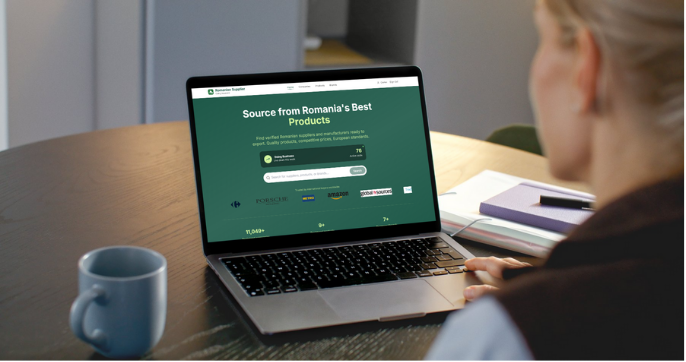
Short answer. For industrial sourcing inside Europe, the platforms buyers actually use are Europages (Visable), Kompass, "Wer liefert was" (wlw) and country-specific directories such as Romanian Supplier; Alibaba remains the reference for Asian manufacturing. Retail-wholesale marketplaces like Ankorstore or Orderchamp serve shops buying finished consumer goods, not procurement teams buying components or contract manufacturing. This guide compares the options on the criteria that matter to a purchasing manager. Last reviewed September 2026.
Why look for an Alibaba alternative in Europe?
Alibaba is unmatched for breadth and price discovery, but three things push European buyers toward nearer suppliers: lead time (six to ten weeks by sea versus days by road inside the EU), compliance (an EU manufacturer is already subject to CE marking, REACH and RoHS, and the Carbon Border Adjustment Mechanism on imported steel and aluminium, payable from 2026, does not apply to goods made inside the Union), and total landed cost, where freight, duties, quality-inspection trips and working capital tied up in transit often close the unit-price gap. None of this makes Alibaba the wrong choice for every category — for standard electronics or high-volume consumer goods it usually still wins — but for engineered parts, textiles in small runs, furniture, food and private label, a European supplier is frequently cheaper once everything is counted.
How do the main platforms compare?
| Platform | Operator, HQ | Coverage | What it is best for | Supplier verification | Cost to buyers |
|---|---|---|---|---|---|
| Alibaba.com | Alibaba Group, China | Global, strongest in China and South-East Asia; millions of suppliers | High-volume manufacturing, standardised goods, price discovery | Paid "Verified Supplier" tier with third-party on-site checks; Trade Assurance escrow | Free |
| Europages | Visable, Germany/France | ~3 million company listings across Europe, all sectors | Broad first search for European suppliers by product and country | Self-declared profiles; premium suppliers pay for placement | Free |
| Kompass | Kompass International, France | 70+ countries, company data with classification codes | Structured company data (activity codes, size, executives) for shortlisting and due diligence | Data compiled from registries and supplier updates | Free search; paid data exports |
| wlw – Wer liefert was | Visable, Germany | Germany, Austria, Switzerland | Engineered parts and machinery from the DACH region | Self-declared; paid supplier profiles | Free |
| Romanian Supplier | Fabricat în RO, Romania | 11,113 Romanian manufacturers, exporters and service companies, 18 industries, 42 counties | Depth in one low-cost EU manufacturing country: machinery and electrical, metal fabrication, plastics, textiles, furniture, wood, food | Every profile is reviewed before publication and identifies a registered Romanian company; product, certification and market details are declared by the company (how the data is built) | Free |
Two platforms often mentioned in this context do not belong in the same list. Ankorstore and Orderchamp are wholesale marketplaces where independent shops buy finished consumer brands in small quantities; they are useful for a boutique or a concept store, not for a purchasing department sourcing components, packaging or contract manufacturing.
Which platform should you use for which purpose?
You need a first, wide list of European candidates. Start with Europages and, for German-speaking countries, wlw. Both let you search by product and filter by country; expect a lot of self-declared claims and plan to verify.
You need company facts for a shortlist. Kompass is the better source for registered activity codes, employee bands and management names, which you will need for a supplier questionnaire anyway.
You have decided on a country. Use a national directory. For Romania, the Romanian Supplier directory organises companies by industry and county, so you can go directly to, say, metal fabricators in Cluj or furniture manufacturers in Maramureș, and see each company's products, certifications and export markets on one profile.
You are buying standardised goods in volume and price is the deciding factor. Alibaba, with Trade Assurance and a third-party inspection before shipment.
Romanian supplier vs Alibaba: how do they differ in practice?
| Criterion | Romanian supplier (EU) | Alibaba supplier (typically China) |
|---|---|---|
| Transit time to Germany | 2–3 days by road | 5–8 weeks by sea, 5–10 days by air |
| Customs and duties (EU buyer) | None inside the single market | Import duties (0–12% for most industrial goods), customs clearance, import VAT at the border |
| Product compliance | Manufacturer is directly liable under EU law (CE, REACH, RoHS, GPSR) | Importer becomes the responsible economic operator in the EU |
| Carbon border adjustment (steel, aluminium, cement, fertilisers) | Not applicable | CBAM certificates payable from 2026 |
| Typical minimum order | Lower; many SMEs accept small series and pallet quantities | Higher; MOQs set for container economics |
| Communication and visits | Same or adjacent time zone; a factory visit is a one-day trip | Time-zone gap; visits require travel and often an agent |
| Unit price on standard items | Usually higher | Usually lower |
| Where the advantage lies | Engineered and made-to-drawing parts, short runs, textiles, furniture, food, private label | Standard electronics, plastics in very high volumes, consumer goods |
The honest summary: Alibaba wins on catalogue breadth and on unit price for standardised, high-volume products; a Romanian (or any EU) supplier wins on landed cost and risk for anything engineered, regulated, perishable or ordered in modest quantities.
How do you verify a supplier found on any of these platforms?
Listings on every platform, including ours, are only the start of due diligence. Before sending a purchase order: confirm the legal entity and its financial statements through the national registry (in Romania, the company's CUI can be checked on the Ministry of Finance and Trade Registry websites), validate certificates with the issuing body or the IAF CertSearch database rather than trusting a PDF, ask for two customer references in your own market, request a sample or a first article, and agree Incoterms, payment terms and a quality plan in writing. For a step-by-step version see how to source manufacturers in Romania.
Frequently asked questions
What is the best alternative to Alibaba for European suppliers?
There is no single equivalent. Europages and Kompass are the largest pan-European directories; wlw covers Germany, Austria and Switzerland; and national platforms such as Romanian Supplier give more depth inside one country. Most procurement teams combine a pan-European search with one or two national directories for the countries they have chosen.
Is Romanian Supplier a marketplace or a directory?
It is a B2B directory and sourcing platform focused only on Romania: 11,113 company profiles organised by industry and county, with products, certifications and export markets, and a messaging and catalogue-request flow for registered buyers. It does not process payments or hold escrow.
Are European B2B platforms free for buyers?
Yes. Europages, Kompass (search), wlw, Alibaba and Romanian Supplier are free for buyers; suppliers pay for premium placement. Kompass charges for data exports and enrichment.
Is it cheaper to source from Romania than from China?
On unit price, China is usually cheaper for standardised goods. On landed cost — including freight, duties, CBAM where applicable, inspection travel and inventory in transit — Romania is often cheaper for engineered parts, short runs and regulated products sold in the EU. The answer depends on the category and the volume, which is why buyers should compare total cost, not the quote.
Which Romanian industries are strongest for sourcing?
Machinery and electrical equipment, metal fabrication, plastics and rubber, textiles and apparel, furniture and wood products, and food and beverages. Romania's national export data confirms the first three as the country's largest export categories; see Romania's exports by industry.
Topics
Adrian Ambrose
Founder of Fabricat în RO (2014) · Owner of Romanian Supplier (2026)
Adrian Ambrose founded Fabricat în RO in 2014, the Romanian platform and community that promotes products made in Romania — a marketplace and producer directory, promotion packages, a podcast with Romanian entrepreneurs and editorial guides that have supported more than 370 companies. Since 2026 he is the owner of Romanian Supplier, the export directory where international buyers find, verify and contact Romanian manufacturers. A marketing specialist with a background at ALTEN Group, he writes about sourcing from Romania, the country's export industries and the practical side of working with Romanian factories, drawing on the platform's database of more than 11,000 registry-checked companies.
LinkedInRelated guides
A math-based guide for Romanian suppliers: calculate the ROI of any paid B2B listing, see break-even tables for each Romanian Supplier plan, and learn when a free profile is enough.
A practical first-year export plan for Romanian SMEs: readiness self-test, choosing a first EU market, three sales channels, a reply template for foreign inquiries, pricing, samples and safe payment.
Many Romanian exporters already have a profile on Romanian Supplier, built from public records. Here is how to find it, claim it for free, complete it and submit it for review.